
The Kegel Myth: Why a Man's 1948 Solution Isn't Working for Women
How Dr. Arnold Kegel's 4-muscle approach ignores your body's 14-muscle reality and why whole-body healing is the answer you've been searching for

I need to tell you something that might make you want to throw your phone across the room.
For the past 76 years, women have been told to "just do Kegels" for everything from bladder leaks to pelvic pain to post-baby recovery. We've been squeezing our way through sneezes, clenching through coughs, and contracting through countless grocery store checkout lines, convinced we're doing the right thing for our bodies.
But what if I told you that the man who invented Kegels only targeted 4 out of 14 pelvic floor muscles? And that for many women, doing more Kegels actually makes symptoms worse?
Yeah. I'm mad about it too.

The man behind the myth
Let me introduce you to Dr. Arnold Kegel. In 1948, this gynecologist published a paper about exercises to help women with urinary incontinence. His innovation was revolutionary for the time – instead of immediately rushing to surgery (which was often the only option), he offered women a non-surgical alternative.
Dr. Kegel created something called a perineometer, basically a pressure gauge that measured how hard women could squeeze their pelvic muscles. His prescription? 300 contractions per day, building up resistance like you're training for the Pelvic Floor Olympics.
Now here's where it gets interesting. Recent research has uncovered that a woman named Margaret Morris, a dancer and physical therapist, actually developed pelvic floor exercises twelve years earlier in 1936. But guess whose name stuck? The man's, of course.
But here's the real kicker – and this is where my blood pressure starts rising. Dr. Kegel's approach focused on strengthening and tightening. Apparently, what women needed in 1948 was to be “tight”. Thanks, Arnold.
The problem with the "tighten everything" mentality
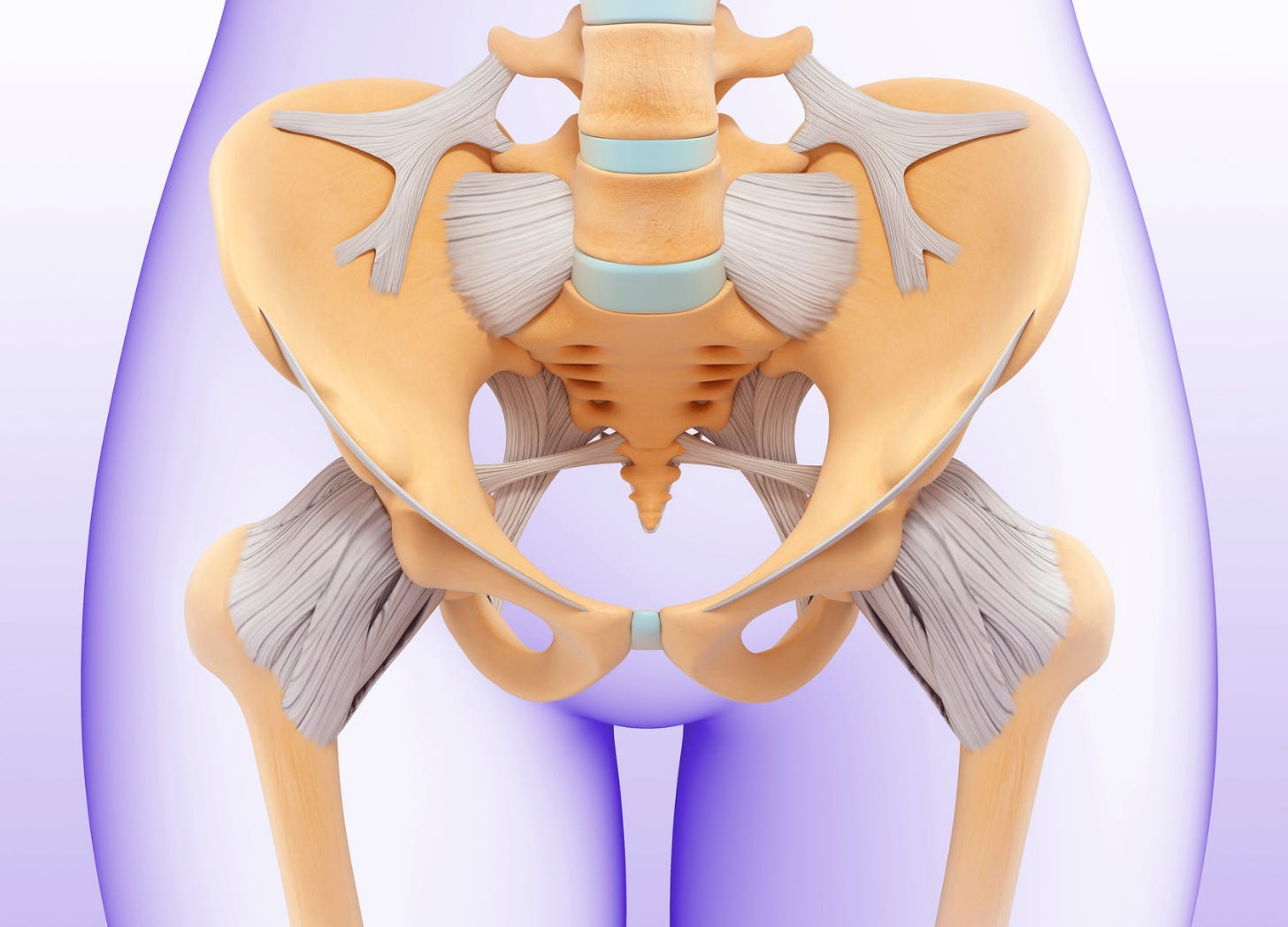
Your pelvic floor isn't a single muscle you can just squeeze harder to fix. It's 14 distinct muscles organized in 5 layers, each with specific jobs that require both strength AND the ability to relax.
Think about it this way: if you walked around with your shoulders constantly tensed up by your ears, what would happen? You'd get neck pain, headaches, and eventually those muscles would become both tight AND weak. The same thing happens with your pelvic floor.
What's really happening when you over-Kegel
Research now shows us that constantly contracting your pelvic floor muscles can lead to:
Muscle strain and fatigue – just like any muscle that never gets to rest
Weakness from tightness – muscles that can't fully relax can't fully contract either
Incomplete bladder emptying – tight muscles prevent your bladder from doing its job
Painful sex – because tight muscles don't allow for comfortable penetration
Increased anxiety – because nothing's more fun than being told to do something that makes you feel worse
It's like being told the solution to your headache is to clench your jaw harder. Ridiculous, right?
The medical system's rush to surgery
Instead of looking at the whole picture, the medical system often jumps straight to surgical solutions. Bladder slings, mesh implants, hysterectomies – procedures with serious risks including chronic pain, infections, and repeat surgeries.
Nearly 1 in 5 women will undergo surgery for pelvic floor dysfunction in their lifetime.
We spend over $1.5 billion annually on pelvic organ prolapse surgery alone. The average woman waits 6+ years before receiving appropriate conservative care.
Meanwhile, studies show that conservative treatments have success rates of 56% compared to 6% without treatment.
But surgical procedures get higher reimbursement rates, so guess what gets recommended first?
My lightbulb moment
My entire perspective shifted during my yoga teacher training when I finally learned about breath, the deep core, and how the pelvis is both the foundation of movement and the seat of power. I discovered that my pelvic floor was part of an interconnected system – not just a collection of muscles to squeeze into submission.
I learned that:
My diaphragm and pelvic floor move together like a synchronized dance
My hip mobility directly affects my pelvic floor function
My breathing patterns, posture, and even my jaw tension all impact what's happening "down there"
Sometimes the solution isn't more strength – it's more coordination, more relaxation, more awareness
Working in a nursing home's Memory Care unit sealed the deal for me. I watched women living in adult diapers because "this is just what happens as you age." Women with dementia dealing with the added burden of incontinence, infections, and loss of dignity.
This is NOT inevitable. We can prevent this. But not with 1948's understanding of women's bodies.
The whole-body solution that actually works
Modern research reveals what I discovered through my own healing journey: pelvic floor health requires a whole-body approach.
It's about pressure management, not just muscle strength. Your core works like a canister – diaphragm on top, pelvic floor on the bottom, with your deep abdominals and back muscles wrapping around. When this system is out of sync, pressure gets misdirected downward, overwhelming your pelvic floor.
It's about coordination, not just contraction. Your pelvic floor needs to know when to engage AND when to let go. Like learning to drive – you need both gas and brakes, used at the right times.
It's about breath, not just squeeze. When you breathe properly, your diaphragm and pelvic floor move in harmony. On inhale, both gently lengthen. On exhale, both engage. This natural rhythm gets disrupted when we're constantly clenching or holding our breath.
It's about movement, not isolation. Your pelvic floor doesn't work in a vacuum. It responds to how you walk, sit, lift, and move through your day. Functional movement patterns that integrate your whole body often work better than isolated exercises.
The evidence is overwhelming
Recent studies comparing yoga and Pilates to traditional Kegel exercises show equivalent or superior outcomes, with higher patient satisfaction and adherence rates. Research demonstrates that integrating core stability with pelvic floor training produces 56% continence rates compared to only 16% with pelvic floor exercises alone.
Even breathing exercises alone have been shown to be as effective as traditional pelvic floor muscle training for urinary incontinence.
The science is clear: we need to move beyond the limitations of 1948's understanding.

Why I created Unleakable
After healing my own pelvic floor dysfunction through this integrated approach, I knew I had to share what I'd learned. Too many women are suffering needlessly, doing exercises that make them worse, or rushing toward surgical solutions that could be avoided.
That's why I created Unleakable – a comprehensive 10-page guide that gives you the real story about pelvic floor health. No more guessing. No more squeezing harder and hoping for the best. No more accepting that leaking is just "part of being a woman."
This isn't about doing more exercises. It's about understanding your body as the brilliant, interconnected system it is and working WITH it instead of against it.
It's time to reclaim your body's wisdom
Getting older doesn't have to suck. Leaking isn't normal. Pelvic pain isn't something you just have to live with. And your body isn't broken – it's just been misunderstood.
You deserve better than a 76-year-old solution created by a man who thought women needed tighter vaginas. You deserve approaches rooted in modern science, lived experience, and respect for your body's complexity.
Ready to ditch the Kegel myth and discover what actually works?
Join the Unleakable waitlist and be the first to get your hands on this game-changing guide. I'll send you the 10-page PDF that will completely shift how you think about pelvic floor health.
Because you're not broken, you've just never had the whole picture.
Until now.
P.S. If this resonates with you, please share it. There are millions of women out there still doing Kegels at stoplights, convinced they're doing something wrong when their symptoms don't improve. Let's give them the truth they deserve.
“Why a Man’s Solution Isn’t Working for Women” could be the title for many things.
Why are we told to breathe through our belly when our lungs are in our chest? This has never made sense to me!