
The Tight Hamstring Trap: Why Stretching Harder Hasn’t Made You "More Flexible"
The surprising reason your hamstrings stay tight no matter how much you stretch... and what they’re actually asking for instead.

My hamstrings and I are old friends. They never miss a yoga class, a hike, or a forward fold while picking up the laundry… and they insist on making their opinion known every single time. For years, I thought I knew exactly what that tight/achey/tender sensation was asking for: stretch me more.
So I did. I held stretches longer, folded deeper, tried PNF stretching, and cranked up the intensity. But instead of loosening, my hamstrings only dug in their heels. The tighter they felt, the more I stretched—and the more I stretched, the tighter they seemed to become.
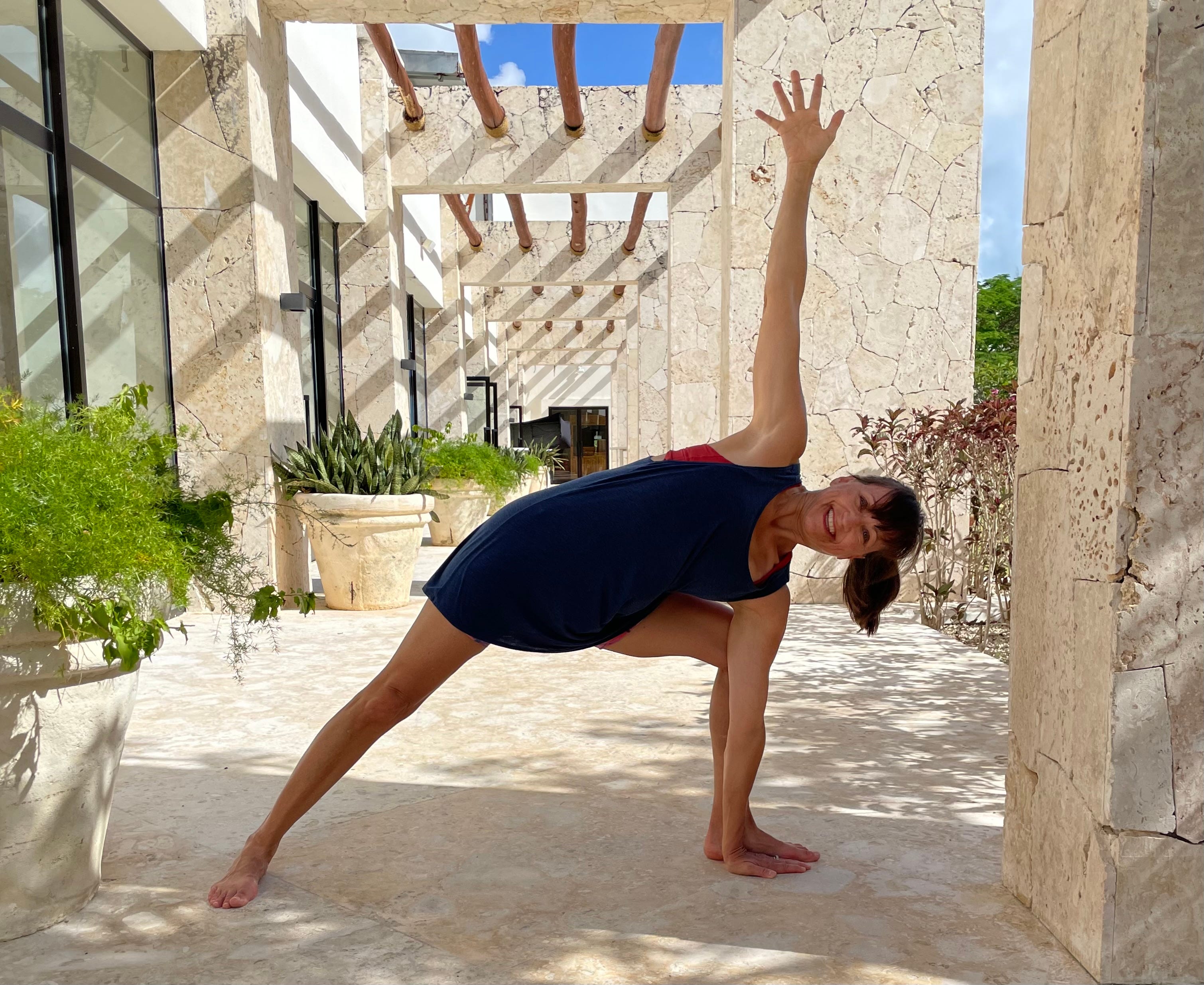
Then one day, the sensation changed. Instead of a satisfying stretch, I felt a sharper ache high up under my sitting bone. Not tightness anymore. Something else. Later that same year, I tripped while carrying 2 armloads of groceries - in catching myself from falling, I felt the other hamstring pull intensely.
That first sharp ache, then the tighter, stressed feeling sent me down a rabbit hole that completely changed how I think about hamstrings, flexibility, and the messages our bodies send us. As it turns out, hamstrings aren’t always asking to become more flexible. Sometimes they’re asking us to listen.
What (and Where) Are the Hamstrings, Anyway?
The hamstrings aren’t one muscle. They’re a team of three: the biceps femoris, semitendinosus, and semimembranosus. Almost all of them start at your sitting bone (the ischial tuberosity), with one exception—part of the biceps femoris starts lower, on the femur—and travel down to the bones just below your knee.
Together, they extend your hip, flex your knee, and help stabilize your pelvis every time you walk, climb stairs, stand up from a chair, or move through a yoga practice. They’re not just stretchy tissue waiting to be lengthened; they’re essential teammates in almost everything you do.
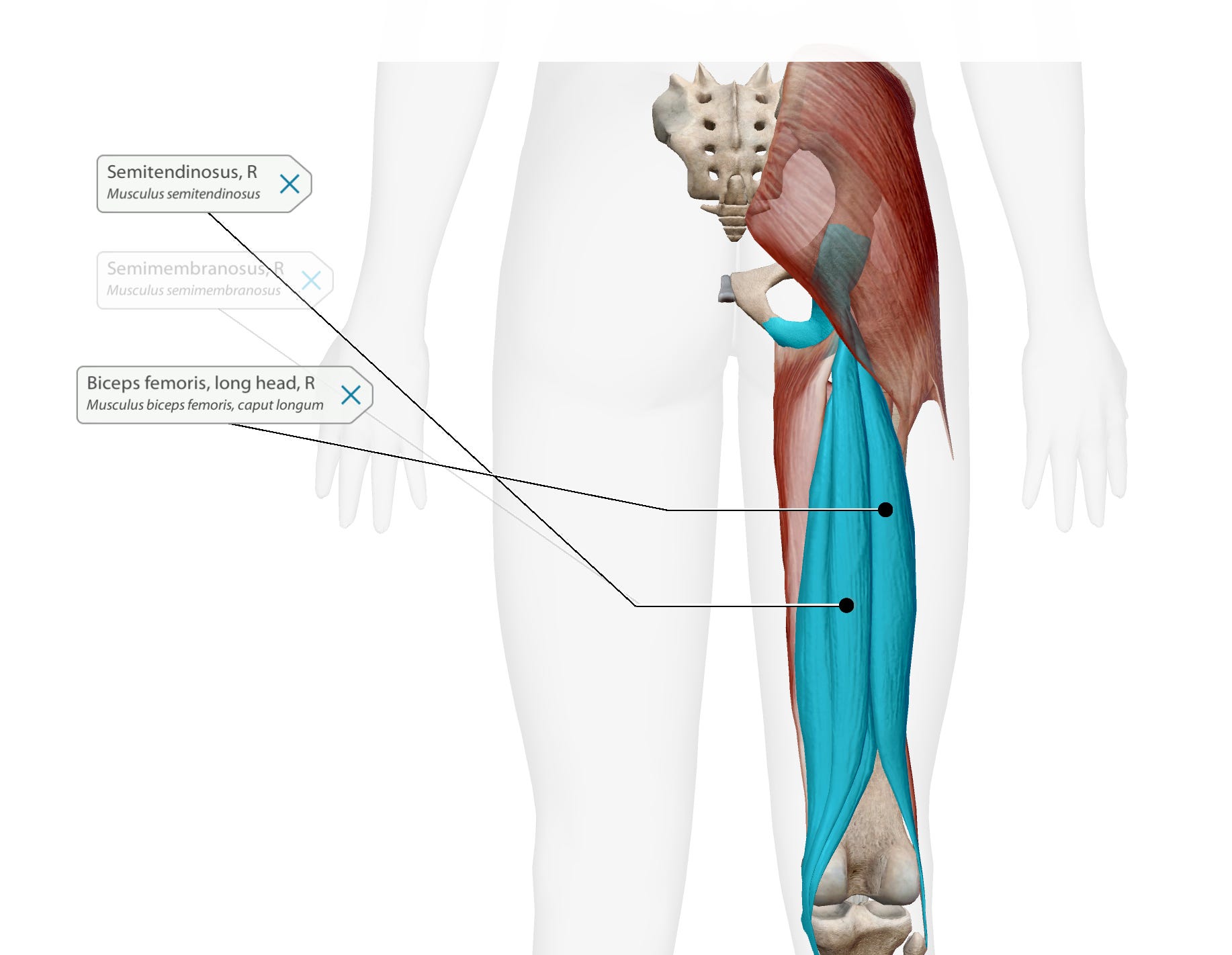
To feel the hammies working, stand up from a chair without using your hands. Those muscles firing along the back of your thighs? That’s your hamstrings doing their job.
And here’s a fun anatomy fact: the word hamstring originally referred to the tendons behind the knee. That’s where the expression “to hamstring” someone comes from, because injuring those tendons dramatically limits an animal’s (or a person’s) ability to move. Again, we see that the tendons and connective tissue are a huge part of the puzzle, not just the muscles.
Tight Doesn’t Always Mean Short
This is one of the biggest misconceptions I see in yoga: if something feels tight, it must need stretching. Sometimes that’s true. But not always.
Tightness is a sensation that your nervous system creates. Tightness can reflect a muscle that genuinely lacks flexibility, but it can just as easily be your body increasing muscle tension because it senses that the area needs more protection or stability.
Think about your shoulders after a stressful day. They creep toward your ears not because they’ve suddenly gotten shorter, but because you’re holding tension there. The same thing can happen with your hamstrings. Sometimes they’re sore from yesterday’s hike. Sometimes they’re fatigued from a workout. Sometimes they’re compensating for another area that isn’t pulling its weight, simply trying to keep you stable.
Instability means a much higher potential for injury. Your body would rather feel tight than feel unstable. Your shoulders would rather feel tight than let your head and neck feel unstable.
Given the choice, your body will almost always choose tight over feeling unsafe. Interesting…
Your Hamstrings Might Be Working Overtime
Imagine bending forward to pick something up off the floor. Ideally, that movement gets shared across your hips, glutes, core, spine, calves, feet, and your hamstrings.
But what happens if your glutes aren’t pulling their weight? Or your hips have stiffened up after hours of sitting? Or your core isn’t helping stabilize your pelvis?
Your hamstrings quietly step in to fill the gap. Like the dependable coworker who keeps covering everyone else’s shift, they start doing more than their fair share. It may seem fine at first, but after a while, your hamstrings start to complain. That complaint often shows up as tightness. Stretching may offer temporary relief, but if the real reason they’re overworking hasn’t changed, the sensation comes right back.
The Nervous System Has a Vote
One of the things I love most about studying the body is discovering how connected everything is. Your brain is constantly gathering information from your muscles and joints, asking a simple question: Do we feel stable?
If the answer is yes, movement feels smooth and effortless. If the answer is no, your nervous system will increase muscle tension to create a little extra support.
Physical therapists call this protective guarding: when the nervous system perceives a threat—whether from injury, instability, or anticipated pain—it increases muscle tension to protect the area, even though the muscle itself hasn’t actually shortened. Sometimes tightness even gets worse right after stretching, because the nervous system reads the deep lengthening itself as the threat and responds by guarding harder, not softer. (CNN Health)
That helps explain why your hamstrings can feel tighter after a stressful week, a poor night’s sleep, a long day at your desk, or a workout you pushed a little too hard. Your body isn’t trying to make your life difficult. It’s trying to keep you safe.
When More Stretching Backfires
Here’s something that surprises many longtime yogis: one overuse injury common among runners, dancers, gymnasts, and dedicated yoga practitioners is high hamstring tendinopathy. It’s even earned the affectionate nickname “Yoga Butt.” It shows up as an ache right where the hamstring tendon attaches to the sitting bone, and it’s technically known as proximal hamstring tendinopathy.
Ironically, the people most likely to get it are often the most flexible people in the room. Years of pulling on that tendon through deep forward folds, splits, or aggressive stretching can leave it irritated and sensitive. Physical therapists note that it isn’t simply an overuse problem—it's often an underloading problem, too. The tendon hasn’t been progressively trained to tolerate the demands being placed on it. (Healthline)
The tricky part? It often still feels tight. So naturally, a lot of us do what we’ve always done: we stretch it. But tendons don’t respond to stretching the way muscles do. An irritated tendon usually responds better to backing off aggressive stretching for a while, gradually rebuilding strength, and giving the tissue time to actually recover. Sometimes the answer isn’t another forward fold. Sometimes it’s a little less pulling and a little more patience.
Other Reasons Your Hamstrings Might Feel Tight
If stretching hasn’t solved it, your hamstrings might be responding to:
Underactive or weak glutes
Reduced hip mobility
Prolonged sitting
Changes in pelvic position
Fatigue from exercise
Sciatic nerve irritation (nerve tension can mimic muscle tightness along its path)
Increased stress or nervous system tension
Notice something? Only one of those is “the muscle is actually short.”
A Simple Experiment
Here’s one of my favorite little tests.
Stand with your feet about hip-width apart.
Soften your knees just slightly.
Gently engage your glutes, just enough to feel them wake up. Hug muscle to bone. Engage without clenching.
Keeping that engagement, hinge forward. Don’t collapse. Expand and Lengthen.
Does the stretch behind your legs feel different? Many people notice it feels less intense. Not because their hamstrings magically got longer, but because the work is finally being shared.
Yoga Is About Better Stability, Not Deeper Stretching
One of the biggest shifts I’ve made in my own practice has been changing the question I ask myself. Instead of asking, “How far can I go?” I now ask, “How well can I move?”
Those are very different questions.
Yoga is often equated with flexibility, but its deepest work lies elsewhere. It’s not about the longest muscles or the deepest expression of a pose—it’s about cultivating a body that feels stable, supported, and connected. A healthy hamstring isn’t necessarily the most flexible one. It knows when to contract, when to lengthen, and when to relax. It works in harmony with strong glutes, a responsive core, mobile hips, steady breath, and a nervous system that feels safe enough to release tension it no longer needs. Yoga isn’t about chasing a shape. It’s about learning to move with intelligence.
So What Should You Stretch Instead?
If your hamstrings feel tight, the answer isn’t necessarily to stop stretching altogether. Stretching can absolutely be part of a healthy practice, but the real question is whether you’re only paying attention to the spot that feels tight or supporting the whole system around it.
Often, happier hamstrings start with the areas that influence them: the hip flexors, glutes, deep hip rotators, and calves. Think of your body as a team. If one player is doing too much, the fix isn’t always to focus on that player longer. Sometimes it’s getting the whole team working together again.
A few poses that help build balance around the hamstrings:
Low lunge to create space through the front of the hips
Figure-four or reclined pigeon to explore hip mobility
Downward dog with gentle movement through the calves and hamstrings
Bridge pose to wake up the glutes and support the back body
Slow hip hinges to practice moving with strength and control
This is exactly the approach I take in my classes. We don’t chase deeper stretches. We build strength, mobility, better breathing, and smarter movement so your body can release unnecessary tension on its own.
If you enjoyed learning why muscles don’t just help us move, but help us respond to the world around us, you’ll enjoy The Psoas–Nervous System Connection, where I explore another muscle with more to say than it gets credit for.
Here’s to happier hamstrings, healthier movement, and a body that feels supported from the ground up!
Let’s stretch smarter, not harder.